SOURCING GUIDES
Tofu vs Cassava vs Bentonite: How to Choose the Right Cat Litter for Your Market
October 21, 2026
Start with the complaint, not the material
Most buyers begin by asking “which litter is best?”. That question has no useful answer. The better question is: what will your customers complain about if you get this wrong?
Every material fails somewhere. Choose the one whose weakness your market will tolerate, and whose strength your market will actually notice.
Side by side
| TOFU | CASSAVA | BENTONITE | |
|---|---|---|---|
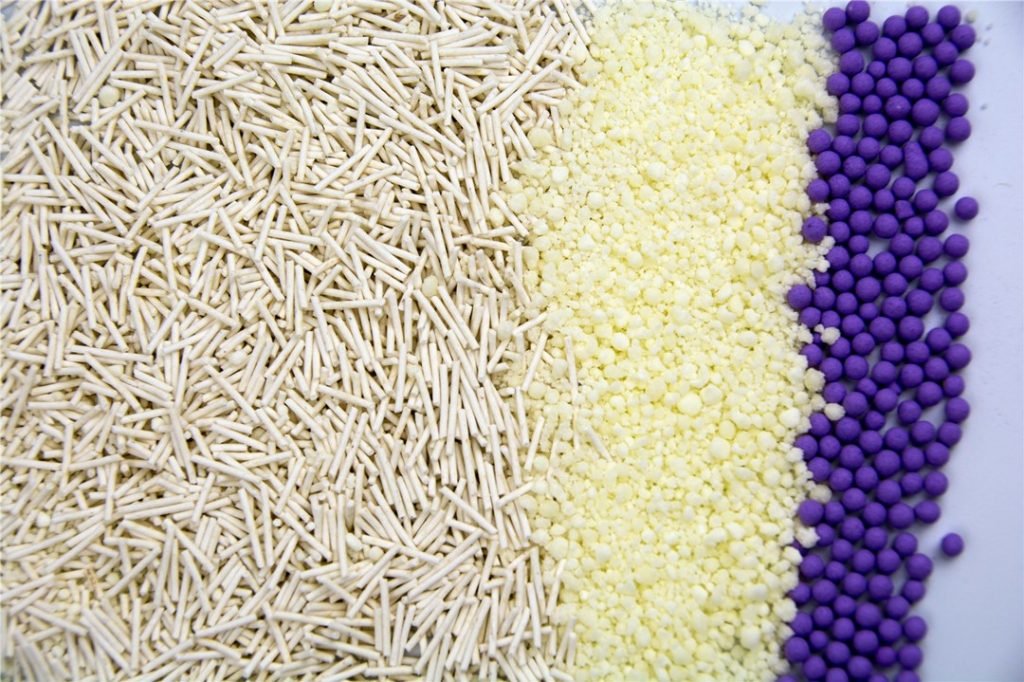
| Base material | Soybean dregs, corn starch, pea fibre | Tapioca starch | Sodium montmorillonite clay |
| Clumping | Good, softer clumps* | Fastest, hardest clumps* | Hardest overall* |
| Water absorption | High* | Highest in our range* | High, by swelling* |
| Dust | Very low* | Lowest* | Low, but highest of the three* |
| Bulk density | ~597 g/L* | 600–650 g/L* | 750–950 g/L* |
| Flushable | Yes | Yes | No — landfill or compost only |
| Unit cost | Mid | Higher | Lowest |
| Known weakness | Can stick to the tray floor | Price; hygroscopic in humid climates | Heaviest, dustiest, not flushable |
* Reference values typical of these material families. Ask us for the batch COA with your samples for the measured figures.
What actually changes your landed cost
Density, more than unit price. Bentonite at 750–950 g/L hits a 20GP’s weight limit at roughly 20–22 tonnes while the container still has empty space. Plant-based litters at 597–650 g/L fill the container by volume first — you ship more bags, but you pay to move air.
This is why a lower price per kg does not automatically mean a lower cost per litre of use. Ask any supplier to quote both. If they can only talk per kilo, they are not thinking about your freight.
What changes your repeat rate
End consumers do not re-order because of a spec sheet. They re-order because the litter solved something:
- No more paste stuck to the tray floor — the single most common complaint about pure tofu litter, and the reason cassava blends exist.
- Clumps that survive scooping — bentonite and cassava do this best.
- No dust when pouring — matters most in apartments and for owners with asthma.
- A disposal story they feel good about — flushable and compostable, which only the plant-based lines can claim.
When a blend is the smarter first SKU
If your market has not decided yet, a blend asks the end customer to compromise on nothing:
- Tofu + bentonite (70:30) — hard clumps like clay, partially flushable. The performance tier.
- Tofu + cassava (70:30) — 100% plant-based and fully flushable, with cassava fixing the sticky-bottom problem. The eco tier.
Many importers stock both, positioned against each other rather than competing.
A short decision guide
- Your buyers are price-led, or they serve catteries and multi-cat homes → bentonite.
- Your market already knows plant litter and wants the easiest first conversation → tofu.
- Your market complains about dust, crumbling clumps, or wants a premium eco story → cassava.
- Your market is undecided, or you want one SKU to serve every household → a blend.
- Your market is humid and containers sit in port → specify reinforced moisture-barrier film and vacuum packing, whatever the material.
The honest way to decide: test all of them
Spec sheets do not sell litter. Hands do. We will send samples of the materials you are weighing up — free, you cover the shipping, and we refund it on your first order. Pour them, scoop them, flush them, and leave them open in your own humidity for a week. That is the test that tells you what your customers will say.